


The likelihood of snagging National Institutes of Health grants has plunged to historic lows, forcing frustrated academic researchers to resort to a variety of tactics to try to obtain funding and, in some cases, keep their jobs, according to a nationwide STAT survey and follow-up interviews with respondents.
NIH data show that securing research awards has become more competitive under the second Trump administration than ever before, and more unpredictable. Just 13% of applications were funded in the past fiscal year, and even top-rated proposals aren’t a sure thing.
For some researchers, this has meant spending much more time writing grants, hoping to beat the odds by simply shooting more shots. Others are looking for other sources of funding, or rewriting proposals to fit with administration priorities. Physician-researchers are having to shift their focus away from science, devoting more time to seeing patients.
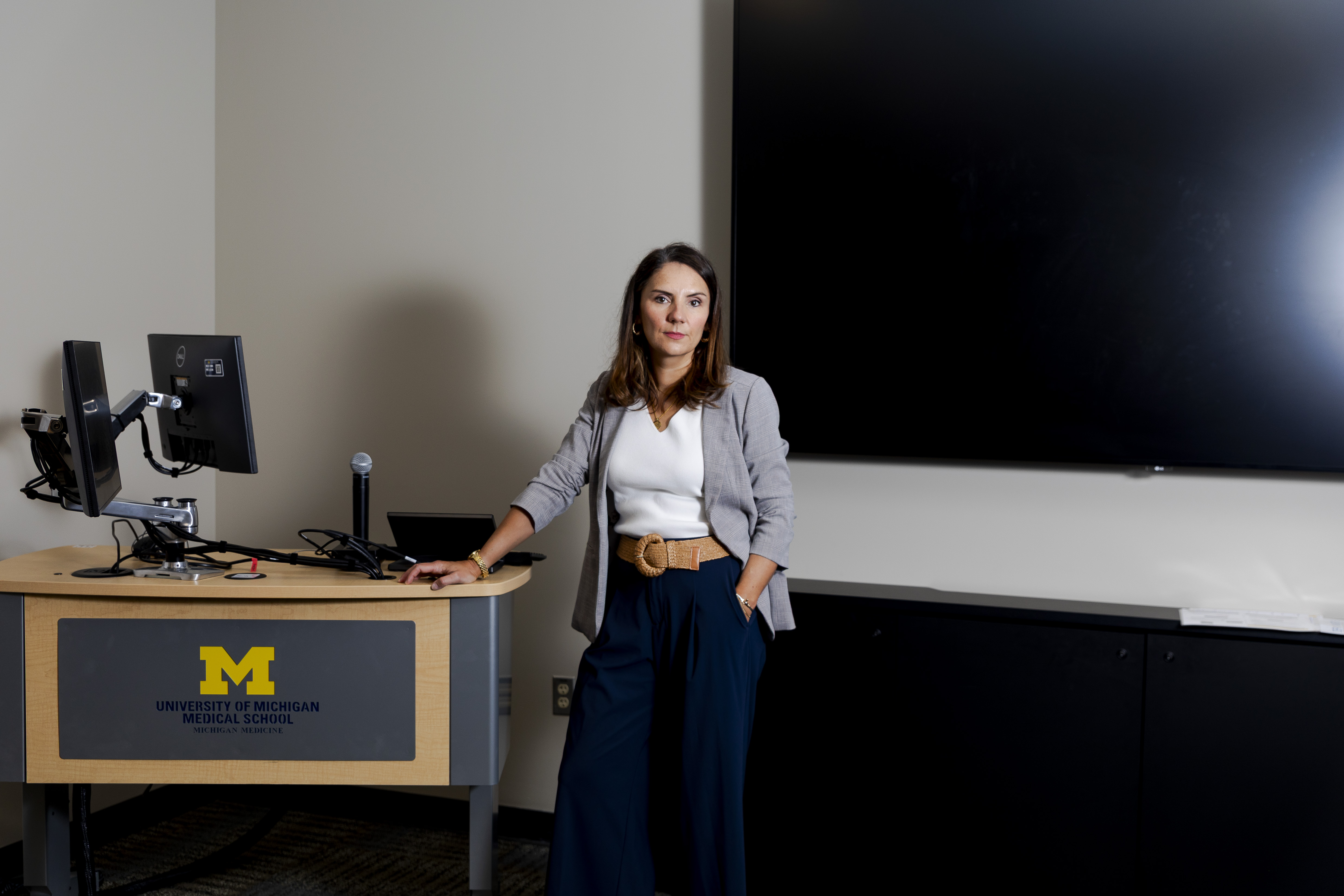
This is something University of Michigan Medical School bioethicist Kayte Spector-Bagdady has watched firsthand, while teaching a course for colleagues who have received career development awards that provide research training. Many of these clinician-scientists are feeling pressure to abandon the latter portion of their professional identity in order to bring in patient revenue to offset lost research funds.
A lawyer by training, Spector-Bagdady doesn’t have the same option. She managed to preserve the last year of funding of a grant to study how hospitals can collect data from patients that are more representative of their community. But with her research focused on health equity, a target of the administration’s cuts, she hasn’t been able to get new funding. “I’m really scrambling to figure out how to support my current staff and fellows, because I can’t do my research by myself,” she said.
Spector-Bagdady is employed in a “soft-money” position, meaning her own job is funded by grants. “Nobody gets paid to just think in academia, which wasn’t something that I fully understood until I got here. You need to cover your salary; you need to teach, you need to see patients, or you need to bring in federal funding. Everybody eats what they kill,” she told STAT in a follow-up interview. “I’m a lawyer. If I lose my funding, it’s not like the OB-GYN department can send me in to do pap smears.”
While many researchers were confronted during the first year of the Trump administration with grant delays and terminations, lab hiring freezes, and layoffs, the second year is in some ways grimmer. Temporary bridge funding from universities is drying up, existing grants are nearing their end, and the flow of new NIH awards is anemic. As one scientist posted in the NIH subreddit this month, “Many academic labs are currently like Wile E. Coyote running on a ledge, not realizing that it has already collapsed into the abyss.”
Competition for NIH grants has long been stiff, but the adoption of a White House-mandated budgeting strategy last year — paying the entirety of many multi-year projects upfront — meant that the agency funded 11.6% fewer grants than it had in previous years, despite spending a similar amount of money. A slew of other policy changes have complicated and slowed the path from a rousing peer review to a funded grant. Study sections, or peer review panels comprised of outside scientists, have been delayed by months, and are reviewing fewer applications. Advisory councils, which provide a second layer of peer review, have been hollowed out. The loss of staff at the agency has also made it difficult to get funding out to researchers, as political appointees put additional layers of vetting in place.
As of April 22, the NIH had spent around $8 billion of its $47 billion budget for this fiscal year, around 30% less than the average spending at the same point from 2021-2024, according to data collected by Grant Witness.
The sum of these policies has weighed heavily on the country’s biomedical researchers, according to a STAT survey of almost 1,000 NIH-funded researchers conducted in January and February. The start of a grant was delayed for 45% of respondents, 29% said a grant application did not go through the full review process, and 43% have cancelled planned research projects. Three in 4 said they had applied for other types of funding — including from foundations or nonprofits, their own institutions, other federal agencies, or industry — but just 21% had received additional support at the time of the survey.
When asked to describe “any ways in which reduced federal funding has affected your lab,” one in five researchers expressed fear, uncertainty, low morale, or stress. Among the impacts they cited were spending more time writing grant proposals and high-scoring grants not being funded.
Success rates for grants inching toward the single digits “becomes pretty close to unviable, particularly for starting out investigators who just need to get that grant support to really get their lab going,” said Francis Collins, the longtime NIH director who left the agency last year. “If your chance is 5%, how much are you going to be able to stick it out in that situation? So it is a very serious circumstance. It’s a major reason why young investigators are demoralized and wondering whether there’s a future for them.”
The NIH has also cut back on targeted “notices of funding opportunities,” postings that are intended to broadcast the agency’s interests and help guide researchers. In 2024, the agency had 756 such announcements. In 2025 it posted 125, and thus far in 2026, the agency has published just 14. It has meant that as researchers like Spector-Bagdady attempt to navigate murky waters in applying for federal funding, they are doing so rudderless.
She is not alone. Thirty-two percent of STAT survey respondents said the grant programs, or “requests for applications,” under which they were funded had been terminated over the past year, and 41% said they have shifted priorities to be more aligned with the administration. This has been difficult, however, because of the lack of funding notices, Spector-Bagdady said. “It’s frustrating as a scientist to not only have to try to pull together cutting-edge, fundable science, but also try to navigate these tensions without having any clear direction on how to do so,” she said. “I’m a lawyer. I like rules. I like following the rules, but I don’t know what the rules are.”
The NIH did not respond to a request for comment regarding concerns about low paylines, or the dearth of NOFOs.
During the decade that Michael Lauer led the NIH arm that awarded external grants before resigning early last year, the success rate of applicants ran between 16% and 20%. “We were already in a highly, hypercompetitive state then, and now it’s down to 10%,” he said. “So we have a very bad situation that is only getting worse.” Combined with the proliferation of soft money positions at universities, he added, “this hypercompetition underlies why the system is so incremental and why ‘edge science’ or novelty is going away. One cannot be in a position to think deep thoughts and come up with highly innovative ideas when one’s major concern is whether or not you’re going to be able to keep your laboratory funded this year, next year, and the year after that.”
Payline crashes to ‘almost a breaking point’
The odds of success in winning an NIH grant have ticked down gradually since the early aughts, when the NIH budget was doubled, lessening competition for awards. Even then, researchers expressed concern about the viability of careers built off NIH funding.
Nicholas Boulis, a neurosurgeon and researcher at Emory University, recalls a senior colleague “essentially behaving like the sky was falling and saying, ‘Give up, don’t, don’t even bother,’” when the threshold for which grants were likely to be funded — called the payline — dipped below the 20 percent. Boulis persevered, hoping to do health services research that would help him provide better care to his patients. But since then, he has seen that payline inch downward.
Boulis, like many other researchers, had proposals that were ranked as being in the top percent of proposals but were not funded. “A 4% payline is just almost a breaking point,” he said, adding that he has focused his attention on applying for grants elsewhere.
As grant proposals go through peer review, they are given a score showing how they rank relative to other proposals. In November, the agency announced that it was moving away from using paylines as strict cutoffs. According to data released by the NIH, proposals that scored in the top 10% were almost certainly funded in years past, but their odds of success amounted to a coin flip in 2025.

This comes as the review process for some grants has stalled as a result of delayed study section meetings at the outset of the Trump administration and during the government shutdown last fall, staffing shortages, and a confusing legal landscape for grants.
“Everything is so backlogged, I’ve submitted a grant in June of 2025, and it didn’t get reviewed until February of 2026,” said Erin Ingvalson, who studies speech perception at the University of Washington. Her remaining funding from the NIH ends in June, at which point she will have to close down her lab if no new funding comes in, because she is also in a soft money position.
“It is demoralizing, and I have learned to live with the anxiety because it is out of my control. I have done nothing wrong. I have done good science. It is recognized by my peers. I am proud of the work that I have done,” she said. “It may come to an end, but it’s not my fault.”
Even for those whose research interests fall into areas supported by the administration, delays in review and low odds of success have made supporting research more difficult. Diana Robins runs a center at Drexel University, the first to study autism from a public health perspective. This has been a topic of intense scrutiny from the administration, which has claimed it wants to explain the cause of increasing autism rates in recent years.
“One of the hardest parts is the lack of stability. We used to understand how federal funding works. Yes, there’s a lot of hard parts, but it’s predictable. You understand the cycles of this is when grants are due. This is when they get reviewed by peers. This is when they move on to council. This is when they get awarded,” she said. “All of that has been thrown out the window. Deadlines have changed. Reviews are canceled. Entire RFAs are canceled.”
Reducing NOFOs by half
What researchers should be proposing has become more opaque than in the past, in part because of a dearth of targeted notices of funding opportunity. Reducing the number of NOFOs has been a goal of the current administration, and has been a particular focus of Jon Lorsch, the current NIH head of extramural research.
An internal presentation shared with STAT by an NIH staffer involved with grantmaking, written by a “NOFO Reform Group” made up of senior leaders at the agency, outlines the goals of the shift as empowering “investigator-driven” projects, reducing the use of “overly narrow / specific” opportunities, and increasing efficiency by spending less effort on writing and publishing NOFOs. The presentation does not mention a goal for the number of NOFO’s, but another presentation given by Lorsch in November 2025 stated the goal was to reduce the number of postings by 50% relative to the previous year.
The internal presentation also cites an August executive order as one rationale for the change. The NIH presentation notes the order calls for “review of funding opportunity announcements and related forms to ensure that they include only such requirements as are necessary for an adequate evaluation of the application and are written in plain language with a goal of minimizing the need for legal or technical expertise in drafting an application.”
While there has been discussion about needing to reduce the number of NOFOs in the past, some researchers believe the current approach goes too far. Publishing a small number of “parent” funding opportunities can also make certain kinds of projects, like clinical trials or projects spanning several institutions, more difficult to conduct.
“My take is that a lot of this is coming from the conservatives in the administration who are of the libertarian bent, who basically don’t really believe that the NIH should exist in its current form,” said Elizabeth Ginexi, a former senior program officer at the agency who has written about the dearth of NOFOs. She specifically referenced language in Project 2025 stating that NIH should be less involved in directing research, including a passage where it calls for research funding to be doled out to states as block grants, that they can then allocate as they see fit.
According to the internal presentations, the agency is eyeing leaning its portfolio away from R01 grant grants, which have made up the vast majority of awards in the past, and to a different mechanism, called an RP1. The intention would be for the award to have three different pathways — an “exploratory” award that would fund projects for 1-3 years, a “standard” award that would last 4-5 years, and an “extended” award for up to 7 years.
Have you had an NIH grant proposal reviewed this year?
*Required
How the survey was done
STAT and MassINC Polling Group surveyed 989 researchers from 45 states, Washington, D.C., and Puerto Rico between Jan. 28 and Feb. 18. The survey was emailed to about 41,000 NIH-funded scientists, relying on a public database of grant recipients in 2022. Only the 97% of respondents who said they had active grants in 2025 were asked questions about specific grant impacts. The results were weighted based on each researcher’s total NIH funding and their region of the country, and the margin of error for questions asked of the full sample is 3.3 percentage points.
STAT’s coverage of the federal government’s impact on the biomedical workforce is supported by a grant from the Dana Foundation and the Boston Foundation. Our financial supporters are not involved in any decisions about our journalism.


