An abdominal aortic aneurysm is a life-threatening vascular condition with limited treatment options.
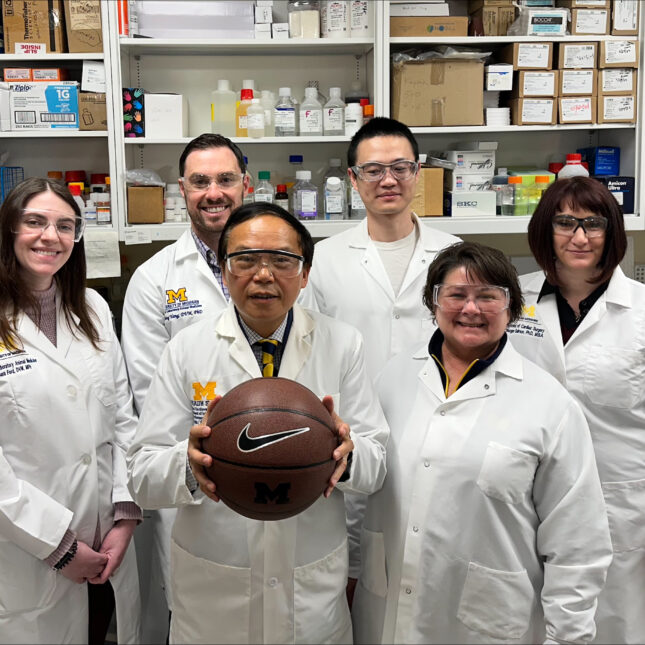
Now, researchers from the University of Michigan Frankel Cardiovascular Center have identified a driving force behind the condition, opening up a potential target for new therapies. Their paper uncovering the causal link between triglycerides and abdominal aortic aneurysms won the STAT Madness 2026 popular vote.
Triglycerides have long been considered a biomarker for vascular disease. But using three different mouse models, the Michigan team demonstrated that the common type of fat plays a direct role in aneurysm development, and that lowering triglyceride levels with certain drugs can stop them from forming and rupturing.
“This study is foundational,” said Eugene Chen, the endowed Frederick Huetwell Professor of Cardiovascular Medicine at University of Michigan Medical School and co-senior author of the paper. “So far, there are no drugs for the entire disease.”
The 2026 STAT Madness competition stacked 64 teams against each other in a month-long, bracket-style tournament and celebration of biomedical research. Over six rounds, the contest garnered 168,192 votes for papers on topics that include smart dental floss that monitors stress, Baby KJ’s personalized gene therapy, and an artificial intelligence model designed to predict cell behavior.
In the end, Michigan claimed victory with 58% of the votes in the final round, beating Florida International University’s paper identifying the role of translocator protein 18 kDa as an early marker of Alzheimer’s disease.
The Michigan team also had competing papers in the 2024 and 2025 STAT Madness brackets, Chen said. But this was its first time in the finals. “This year, we’re the lucky guy,” he said.
An abdominal aortic aneurysm occurs when part of the lower wall of the body’s main artery weakens, creating a bulging, enlarged area in the blood vessel. Most aneurysms are asymptomatic, but the mortality rate is upwards of 80% if they rupture. Treatment options include screening and surgical repair.
Whether triglycerides potentially caused the deadly aneurysms was unclear and controversial, the authors said. To investigate the question, the team first combed through genomic, metabolic, and other data. That analysis suggested that triglyceride-rich lipoproteins and proteins that regulate triglyceride metabolism, such as ANGPTL3, play a direct role in aneurysm risk.
Chen and his colleagues also deployed three different mouse models, each with varying levels of hyperlipidemia, or too much fat in the blood, comparing them to healthy control mice. They then infused the mice with a hormone called angiotensin II, which increases blood pressure and induces the aneurysms.
The team uncovered a dose-dependent relationship. Mice with moderate triglyceride levels had accelerated aneurysms form, those with higher levels experienced an aortic dissection or tear, and most mice with severely high concentrations died from an aortic rupture. “The higher the TG [triglycerides], the more severe the aneurysm,” Chen said.
Elevated triglycerides and a fatty acid called palmitate also impaired an enzyme called lysyl oxidase, which maintains the structure of the aortic wall, the team found. That provided a potential mechanism to explain the link. Over-expressing the enzyme eliminated the aneurysm risk from the triglycerides in one of the models, the team found.
Then, they started looking for drugs to lower triglyceride levels. Older, lipid-lowering drugs called fenofibrate and niacin didn’t provide enough benefit. “We spent almost three, four years in order to find effective drugs,” said Yaozhong Liu, a postdoctoral researcher at the University of Michigan and lead author on the paper.
They finally found success with an antisense oligonucleotide, a short strand of genetic material that works by binding to specific mRNA sequences and changing protein production. The target was a protein called ANGPTL3. The drug lowered triglyceride levels by up to 50% and prevented aneurysms in the mouse models.
“We hope that these drugs can be a very interesting candidate,” Liu said.
The paper was published in August 2025 in the journal Circulation.
The work has limitations, the authors acknowledged. Some of the animal models also showed increases in total cholesterol, making it difficult to fully distinguish the role of rising triglycerides; but the team added that the total sum of evidence supported a causal connection. The therapies were tested in mice, so the results need to be confirmed in human trials, they said.
The runner up: An early marker for Alzheimer’s disease
A team at Florida International University took second place for its paper demonstrating that translocator protein 18kDA, or TSPO, is an early marker of Alzheimer’s disease that could help diagnose the condition sooner or even become a new therapeutic target.
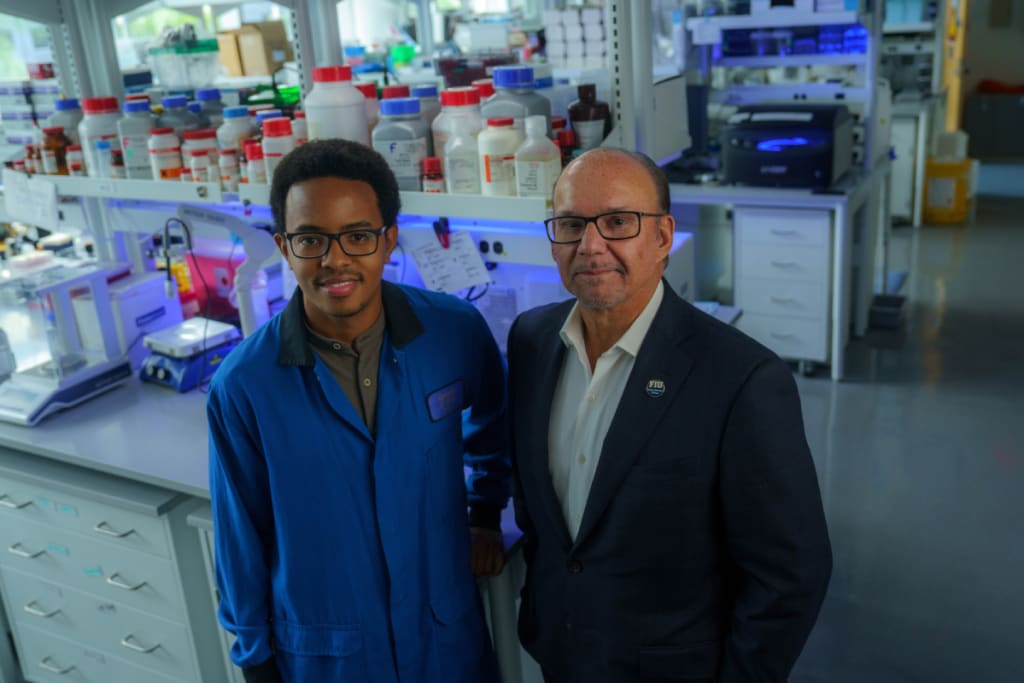
The protein is already a widely used marker in brain imaging to assess neuroinflammation in injuries or Alzheimer’s disease, thanks to the earlier work of the paper’s senior author, Tomás R. Guilarte, dean of the Robert Stempel College of Public Health and Social Work at FIU. Still, the protein’s role in the underlying pathology of Alzheimer’s disease remained unclear.
Then, Guilarte traveled to Medellín, Colombia, to meet with Francisco Lopera, the pioneering Alzheimer’s researcher who uncovered a heritable form of the disease that existed in his home region. A mutation in the gene called presenilin 1 was responsible for the early-onset disease in the area, and Guilarte wanted to work with Lopera’s team to study TSPO in the population. “It took me about three years to convince them that this was a great project,” Guilarte said. “They opened up the doors.”
Lopera, an author on the paper, died from metastatic melanoma 2024, at age 73.
The paper was published in July 2025 in the journal Acta Neuropathologica.
The team used an Alzheimer’s mouse model that includes human familial mutations and develops early signs of the condition. They tracked TSPO levels, neurobiology, and behavior of the animals across 12 months, comparing their development to that of control mice.
Machine learning helped them analyze brain tissue images. “We used new technologies that helped us do analysis that years before, it was almost impossible to do,” said Daniel A. Martinez-Perez, a public health doctoral student at FIU and the paper’s lead author.
The TSPO levels in the mice began rising as early as 1.5 months of age, in a memory-related part of the brain called the subiculum. That occurred months before any cognitive function changes appeared, at 7 months for females and 12 months for males. But it coincided with the rise of amyloid-beta plaques, an Alzheimer’s hallmark, in the same part of the brain.
The growing TSPO signals came from immune cells called microglia, which were in contact with the plaques and appeared to be responding to them, the team found. That suggests that TSPO is part of an inflammatory process that starts before neurological symptoms first appear. The team confirmed the findings with human brain samples and healthy controls.
“It occurred early. It occurred in a brain region that is known to have the first atrophy in Alzheimer’s disease,” Guilarte said. “We now potentially could target this protein as a therapeutic for Alzheimer’s disease.”
There are some limitations to the study, which the team is addressing in future studies. The number of human tissue samples were small, and all of them were from men, Guilarte and Martinez-Perez said. The next phase of the research includes samples from women and people without family history of the disease. They are also working on culturing human immune cells, to study TSPO’s function and test potential drugs, and want to develop a TSPO blood test.
“Alzheimer’s is one of our biggest public health problems that the world is facing,” said Guilarte. “There are many people working on it, different aspects of it, and we want to put just a little grain in that bucket of sand.”