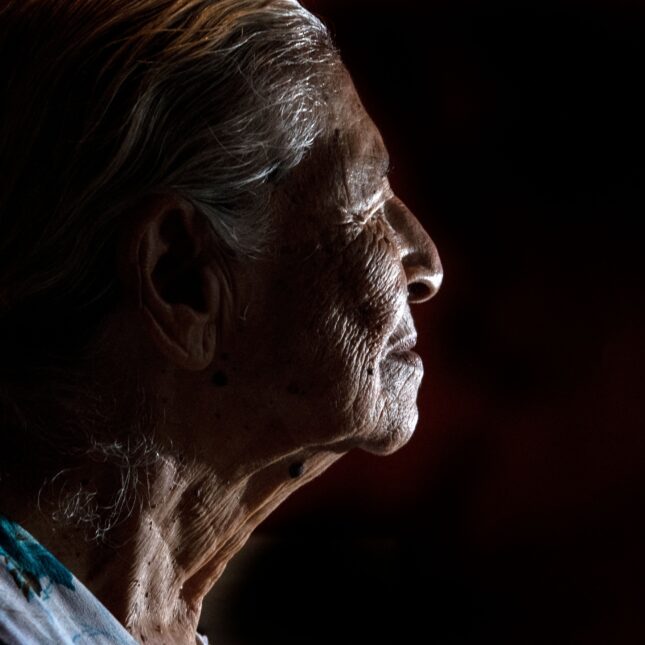
When French geneticist Jean-Francois Deleuze first launched the AGENOMICS study in 2022, he hoped to identify genetic patterns among 1,200 French citizens who’d lived more than 100 years and to compare those to centenarians hailing from one of the world-famous “blue zones.”
Then he started having doubts.
“Some recent articles questioning the very concept of blue zones have given me pause,” he wrote in an email last year. “What’s your take?”
It’s not our first time getting that question. If you write books — as we both did — about extreme longevity, people will ask you about blue zones. The term, now engrained in Western culture, originally referred to 14 isolated villages on the Italian island of Sardinia where, 25 years ago, researchers identified exceptional numbers of long-living humans whose health they attributed to active habits and simple foods.
In a wellness space increasingly crowded with billionaire-backed senolytics, hyperbaric chambers, antiaging drips, and stem cell infusions, blue zones are starting to look like the unpretentious OGs of the longevity movement.
But they’ve strayed far and wide from their humble roots. Skepticism over their foundational science, plummeting numbers of healthy seniors in the original regions, and a burgeoning business in blue zones products is making it more difficult to answer the question: Are blue zones real?
Belgian demographer Michel Poulain and Italian physician Giovanni Pes coined the term “blue zone” in the early 2000s to refer to the converging ink dots on the map they were using to validate longevity claims in Ogliastra, Italy. They published the results of the AKEA study in 2004. A year later, journalist Dan Buettner, who had joined their project, published a National Geographic cover story chronicling the “long life secrets” of elderly residents in Ogliastra, as well as Okinawa, Japan, and — controversially — Loma Linda, Calif. Shortly thereafter, Buettner trademarked the term “blue zone” to protect it, he insists, from misuse.
Over the years, Buettner, more so than the original scientists, has become synonymous with blue zones. He’s written nine best-selling blue zone books that have surpassed $1.2 million in sales and led “expeditions” to endorse new blue zones in Costa Rica’s Nicoya Peninsula and Ikaria, Greece. He founded Blue Zones LLC, which consults with and certifies blue zone cities in the U.S., as well as offering cooking courses and retreats. In 2023, Buettner hosted the popular Netflix documentary “Live to 100: Secrets of the Blue Zones.”
Buettner spoke to us from his rural Wisconsin lake home last summer, where he was drafting his latest book describing a new category of blue zone. Blue zone citizens “are not pursuing health; it ensues,” he explained. “In other words, their surroundings are set up in a way that their micro decisions on a day-to-day basis … are mindless and they are measurably better, day to day, month to month, over decades.”
For almost 20 years, the blue zones went unchallenged. That changed in 2019, when Australian biologist Saul Newman published a preprint paper online arguing that clerical errors, natural disasters, and pension fraud were better explanations for the proportion of centenarians “discovered” in these discrete regions of the world. Newman’s paper, which he updated in 2020 and again four years later, won him an Ig Nobel Prize, although it still has not been formally published in a peer-reviewed scientific journal. Newman blames the hive-mind homogeny of longevity researchers angered to see their age-validation methods challenged. He says his paper has undergone nine rounds of review at BMJ Public Health — most scientific papers typically weather one to three.
“Despite answering all critiques in roughly 65 pages of detail, they have spent the past four months refusing to either accept the paper or send it for further review, or to answer any questions,” Newman wrote in an email last year. “I believe this is reflective of the lack of integrity or answers in aging science more generally, and I hold out no hope that I will ever receive anything from my career than hate and excuses.”
Both Poulain and Buettner are prickly about Newman’s scathing critiques. Poulain, speaking over Zoom, took pains to explain the validation work he did to certify the first blue zone, and the rigorous work he’s done in the ensuing decades, visiting a whooping 95 countries on the hunt for new longevity hotspots.
Buettner, likewise, calls Newman “the only critic I know of.” He points out that fact checkers at the National Geographic “really hold my feet to the fire of making sure what [I] say is underpinned by evidence or research.”
But complicating this spat is the fact that subsequent scientific papers show several original blue zones are no longer home to long-living humans. Demographer Luis Rosero-Bixby of the University of Costa Rica helped Buettner declare Nicoya a blue zone back in 2007; in 2023, he published a new paper in Demographic Research showing that people born on the peninsula after 1930 are not experiencing the same longevity as those born prior.
Similarly, Poulain, with demographer Anne Herm of the University of Tallin, Estonia, published an analysis in the Journal of Internal Medicine in 2024 showing that Okinawans born before and after World War II show stark differences in lifespan. Changing nutrition and lifestyle might explain the stark decline in life expectancy but, they admit, destruction of family registries during World War II may also have led to age inflation when records were reconstructed.
Poulain, Pes, and Buettner are among the authors on an as-yet unpublished paper, led by renowned longevity author Jay Olshansky of the University of Illinois, tracking the demise of the original blue zones. And, in mid-April, the American Federation for Aging Research released a press release announcing that the world’s leading blue zones researchers had reached a consensus on a “formal definition” for blue zones going forward.
“I would say, all blue zones are waning right now, although we found a couple that are waxing or ascending,” Buettner said. Reluctant to reveal where these waxing zones might be, Buettner would only say that they demonstrate it’s possible to “manufacture health.” Singapore, for example — showcased in Buettner’s Netflix documentary — is hailed as a new longevity hotspot: proof that healthy life expectancy can be “engineered.”
Poulain, by contrast, said he’s not entirely persuaded that all the foundational blue zones are gone and is no longer hunting for new ones, but that he has signed onto Olshanksy’s paper to make “peace” with his erstwhile blue zone colleagues, after more than a decade of scientific discord.
Poulain, who has an entirely separate blue zone website offering his own — somewhat different — formula for healthy aging, has never acknowledged Loma Linda as a blue zone, noting that Buettner himself has said he only included it to satisfy National Geographic’s request that a U.S. site be included—something that infuriates Newman, too. And Poulain finds the idea of a Singapore blue zone laughable, saying that even the Singapore minister of health disagrees with the designation. Poulain has instead added the island of Martinique, France, to his website, a designation Buettner said “we don’t agree with.” Asked why Buettner disputes the Martinique blue zone, Poulain laughed: “Because he doesn’t find it.”
Whether or not the original blue zones are disappearing, said Buettner, doesn’t change the fact that, at a fixed point in time, the data from these specific longevity hot spots offer enduring lessons. “The associations and the insights they offer us, I think, are timeless,” Buettner said.
They’ve also proved endlessly profitable. You can purchase blue zone foods, facials, vacations, sleep coaching, and health checks. When Delta recently announced a new flight from New York to Sardinia, the airline marketed the news as the first nonstop flight to a blue zone. Indeed, more than the bickering over whether true blue zones ever existed or are now on the demise, the money being made in their name is the greatest disservice to the science.
The company Buettner originally founded with his trademark has become big business. A Blue Zones LLC website boasts having helped more than 70 North American communities — in all, says Buettner, more than 700 cities have sought advice, yielding “great successes” in Fort Worth, Texas; Naples, Fla.; Tempe and Phoenix, Ariz.; Jacksonville, Fla.; and Riverside, Calif., where projects using “micro-nudges” have produced “double-digit drops in obesity, smoking, and body mass index, among other health and well-being improvements,” he said.
But Poulain said his relationship with Buettner soured more than 10 years ago, after he was invited to visit a Blue Zones LLC project in Naples, Fla. What was clear, he said, was that the neighborhoods that needed help the most would never be able to afford an initial consultation, let alone the $100,000 per year to maintain official Blue Zone LLC designation. A five-year contract with Wellmark Blue Cross Blue Shield of Iowa covering 10 cities, for example, cost an estimated $25 million. “It was clear that progressively, [blue zones] were turning to business,” Poulain said. Tellingly, many U.S. cities first designated as blue zones in the U.S. are no longer certified, likely because the money spent on retaining official certification could be better spent on infrastructure in the cities themselves.
In 2020, Buettner sold Blue Zones LLC to Adventist Health for a reported $78 million. He defends the work as “quite expensive,” typically supporting a full-time team of about 20 people who work with municipalities to enhance physical activity by closing streets to traffic, adding sidewalks and bike lanes, promoting consumption of healthy foods, helping smokers quit, improving air quality, facilitating opportunities for socializing and community building, and more.
In 2021, Adventist Health used the blue zones brand to market a $600 million Miami luxury tower that, in addition to boasting a “blue zones center” combining longevity medicine and advanced diagnostics, featured on-site cosmetic and plastic surgery. Buettner was quick to clarify that he wasn’t involved in that project and objected to this use of the trademark. “Eventually,” he said, “we got them to stop using the brand … and there was no harm done.” Nonetheless, Adventist has continued aggressively marketing a wide range of offerings, including blue zone trips to Singapore, real estate development, assisted-living services, rain gear, salted nuts, and deodorant.
Buettner himself says he oversaw the blue zones frozen meal initiative, which has expanded to 4,000 grocery stores. The dishes, such as the Basil Pesto Veggie Bowl and the Spicey Sweet Hawaiian Bowl, sound considerably more appetizing than the term “peasant food” so often used by Buettner. “We’ve sold 2 million meals and figured we’ve saved about 50 life years in just moving people away from the standard American diet to eating these 2 million whole food plant-based meals. And I’m very proud of that,” he told us. The frozen meals cost approximately $7 to $10 each, depending on the retailer — $13.99 each on Buettner’s Blue Zones Kitchen website.
Buettner has remained on the board at the company he founded and is an active brand ambassador, often using the plural “we” to describe the company’s achievements. His son, Dan Buettner Jr., is an executive vice president and chief development officer. A section of Buettner’s personal website features photos of blue zone-labeled herbal tea, honey, and hot sauce with the tagline “ask us about branding opportunities.” Last summer, he was invited to the U.K. as a guest of King Charles to discuss the success of his blue zones initiatives.
Over time, Buettner told us, it’s become clear that he would need to be “stepping back in” to Blue Zones LLC and “will probably end up owning it again within a couple months.” (Asked to clarify Buettner’s current role within Blue Zones LLC, Adventist Health forwarded the query to a Buettner staffer.)
Twenty-five years after the first blue zones were identified, it’s impossible to say whether they were ever real or not. It’s not feasible to re-create the meticulous demographic validation the original blue zones scientists insist they performed. The centenarians who did or did not open their doors to researchers in the early 2000s to confirm their birthdates are long gone; so, too, are the clerks who reconstructed records lost to war or natural disasters. Even if the number of true centenarians is fewer than originally billed, it seems highly likely, however, that at least a few small clusters of people on island nations did — and perhaps do — live to older ages free of disease and disability than their fellow citizens.
It’s also clear that the blue zone concept, etched into the scientific literature and the cultural consciousness over a generation, helped pave the way for the longevity/wellness craze that followed, including some of the zanier remedies now being embraced by celebrities, influencers, and authors. Best-selling books and merchandise have undoubtedly proven profitable to the people who’ve kept blue zones in the public eye and deflected criticisms of their foundational science, but it is equally true that the recommendations they espouse are mostly common sense: cheap, scalable lifestyle changes, rather than predatory, age-reversing bunk. While the number of peer-reviewed blue zones publications is limited, several blue zone tenets, including plant-based diets, active living, and stress management are supported by scientific study and by many leading American academics in addition to Oshansky, including Walter Willett, Henry Blackburn, and Ancel Keys.
This June, Newman’s own book will hit the stands casting fresh doubt on the field. “Morbid: Debunking Modern Longevity Science” (MIT Press) is a blistering — and often hilarious — takedown of longevity research, with blue zones front-and-center.
But the survival of the blue zones as a concept faces other, insidious threats. These include the push to discover — or manufacture— new ones, changing definitions of healthy longevity, a lack of consensus on what constitutes a blue zone, and the money-making businesses profiting on the brand. If blue zones weren’t a myth to begin with, they’re turning fuzzier at the edges amid the questions about their origin story, their shaky futures, and the profits they generate.
“Everybody wants to be a blue zone,” Poulain lamented. “But the objective is not to be a blue zone. No, the objective is to learn what can we do to follow the same lifestyle principles as we observed in the blue zones.”
For now, Deleuze, the French geneticist, said he has yet to embark on a formal collaboration with “a famous blue zone” although his idea is to use Martinique, Poulain’s latest and last designation. Before moving ahead, however, Deleuze said he wants to see proof that this Caribbean island is, indeed, a true centenarian anomaly.
“Can I see some registries, can I meet some people, can I see some papers that tell me the data is OK?” he told us, over Zoom. “In fact, there are people that have so much interest in continuing to surf on this wave, that they have put everything into it.”
He will proceed with caution. “As you can imagine, the situation involves a complex mix of territorialism, protectionism, personal rather than purely scientific interests, and, for some, the hope of a goose that lays golden eggs. As the French saying goes, one should be careful not to kill such a goose.”
Shelley Wood is a medical journalist and author. Her most recent novel is “The Leap Year Gene of Kit McKinley.” Eric Topol is a cardiologist, executive vice president, and professor, Scripps Research. His most recent book is “Super Agers: An Evidence-Based Approach to Longevity.”